Clothing Layers for Everyday Activity: Plan Adjustment Without Relying on Appearance
An activity outfit can need different layers before, during and after movement. Use the actual conditions, product information and appropriate activity guidance. A thick-looking garment or a matching set does not establish weather protection or personal suitability.
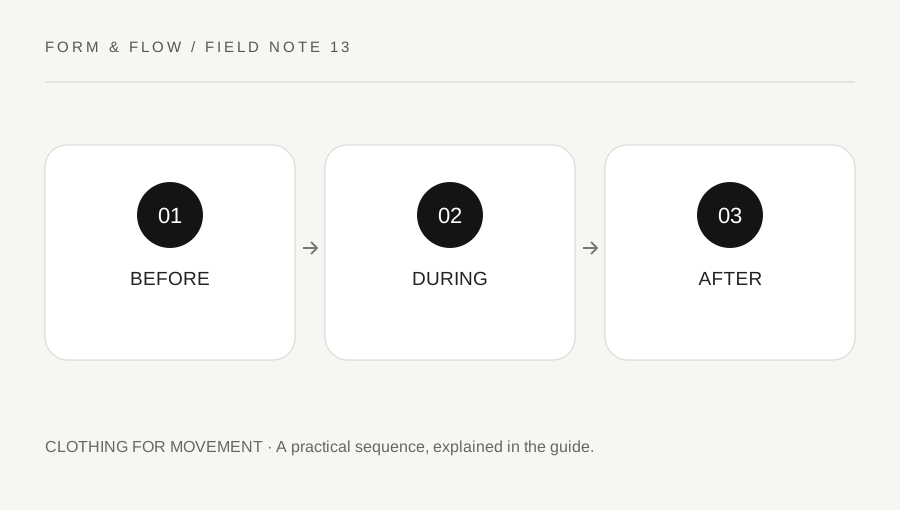
Original explanatory diagram. Examples illustrate a method or decision; they are not claims of personal testing.
Start with the real conditions
Check the current weather and activity setting rather than dressing from a seasonal label alone. Indoor temperature, wind and rain can differ from what an outfit photograph suggests. Follow relevant heat, cold and activity guidance for the actual conditions.
For severe weather or specialized activity, use suitable equipment and official advice. This everyday clothing guide does not establish a safe exposure time or replace individual medical guidance. If conditions are unsuitable, changing the activity plan can be more appropriate than adding another decorative layer.
Check the base and outer pieces separately
Choose a comfortable base that allows appropriate movement and the coverage you want. Add a suitable outer layer according to its actual specification. Fabric name or colour alone does not prove moisture handling, water resistance or insulation.
Check sleeves, hems and fastenings in the complete combination. Layers should not create uncomfortable restriction or interfere with equipment. Follow activity-specific clothing requirements before coordinating colours or repeating an accessory detail.
Plan where removed layers go
If a layer may come off, decide how it will be carried or stored without obstructing movement. Do not tie loose garments where they can catch in equipment or create a trip hazard. Use the venue's appropriate storage arrangement where available.
Keep the base suitable for the setting when the outer layer is removed. A mirror check with everything covered can conceal an impractical base choice. Rehearse the transition before the session rather than improvising with hot or damp clothing in a crowded space.
Use a modest activity example
Imagine arriving at an indoor class from a cooler outdoor setting. The outer layer serves the journey, while the class clothing must meet the provider's movement and footwear requirements. Plan a clear place for the outer layer and confirm the base works on its own.
For an outdoor activity, use current conditions and suitable product guidance instead of assuming the same combination works all season. Stop or change the plan if conditions or how you feel make it inappropriate. Clothing coordination is secondary to those decisions.
Record useful pairings without making guarantees
After actual use, note which pieces allowed comfortable appropriate movement and whether storage and transitions worked. Keep observations specific to the conditions. Do not turn one experience into a claim that a fabric protects everyone in every temperature.
If discomfort or symptoms persist, seek suitable advice rather than attempting to solve everything through layering. A practical record helps you repeat a suitable arrangement while preserving the role of product specifications, current conditions and individual needs. It is a functional activity note, not a general fashion or laundry article.
Create a three-stage note for arrival, activity and departure. List the actual pieces used at each stage and where any removed layer will go. Check that the base remains appropriate if outerwear comes off and that fastenings do not interfere with required equipment. Use product information for performance questions and current conditions for the day. An observed comfortable combination can be saved with those conditions, but not promoted as a universal temperature prescription. This functional record keeps activity clothing distinct from a fashion palette or care guide and makes the real transition easier to repeat.
A practical checklist
Choices are saved in this browser. Reset them here or clear this site’s browser storage.
Questions that come up
Does thick fabric guarantee weather protection?
No. Use the actual product specifications and appropriate guidance for the conditions and activity.
Can one outfit work in every season?
Do not assume so. Conditions and activity demands change, and the same pieces can require different arrangements or another plan.
Is colour matching the first decision?
No. Function, comfort and activity requirements come first. Coordination is an optional later choice.
References & scope
Background references checked on 18 October 2026. Worked examples and diagrams are original teaching material.