Record Activity Minutes and Type Without Letting One Number Tell the Whole Story
A useful activity record states what you did, for how long and under what conditions. A single step count or device score cannot describe every kind of movement. Keep the log descriptive and use appropriate guidance when interpreting it.
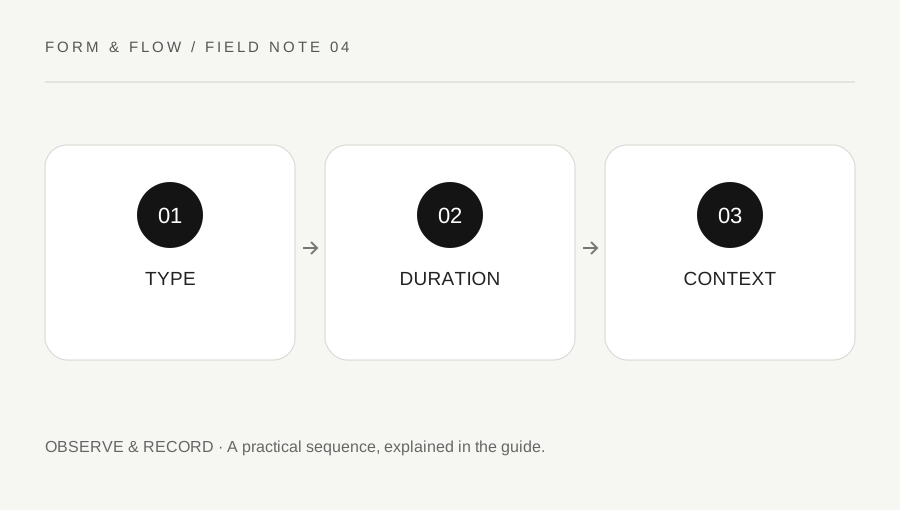
Original explanatory diagram. Examples illustrate a method or decision; they are not claims of personal testing.
Choose a few clear fields
Record the date, activity type, approximate duration and a short note about effort or conditions. Include the source class or plan where relevant. A brief accurate record is easier to maintain than a long form filled with guesses.
Distinguish planned activity from completed activity. A calendar entry says what you intended; a log says what actually happened. If a session was shortened or changed, record that plainly. Do not rewrite the plan afterward to make every day appear identical.
Keep activity categories visible
Walking, an instructed strength session and a mobility class can contribute different information to a record. Do not assume one device metric represents all of them equally. CDC's adult guidance distinguishes aerobic and muscle-strengthening activity, while individual recommendations can vary.
The purpose of this article is documentation, not determining whether your personal programme meets every recommendation. If you have health-related questions or restrictions, use appropriate individual advice. A log can support that conversation without becoming a self-diagnosis tool.
Treat estimates as estimates
A device can estimate duration, steps or other metrics, but its display is not automatically a direct measurement of every physiological quantity. Record the source if you rely on a device value. Do not compare numbers from different devices as though their methods are identical.
If you do not know a value, leave it unknown or use a clearly labeled approximation. A ten-minute estimate is more honest than an invented exact second count. Keep manual observations, device estimates and subjective feelings as different fields.
Work through a weekly note
Imagine a week with two familiar walks, one instructed class and one day when plans changed. Record each actual activity and its duration, noting the class type and any relevant conditions. Do not convert the whole week into a single success or failure label.
Review practical patterns: which time slot worked, which source was clear and what interrupted a plan. That review can help organize the next week. It should not become pressure to compensate for a missed day with an unsuitable harder session.
Use the log to ask better questions
Bring relevant notes to a qualified instructor or clinician if you need help interpreting effort, symptoms or an appropriate progression. The record should describe observations without claiming a diagnosis or measured benefit it cannot establish.
Keep privacy in mind if you share screenshots. Remove personal locations, schedules and other details that are unnecessary for the question. A useful log is a modest record of real activity, with enough context to support planning and conversation while leaving individualized advice to the appropriate source.
For a simple arithmetic check, two recorded activities lasting eight and twelve minutes total twenty minutes of recorded duration. That sum does not by itself classify their intensity, establish a training effect or show that every recommendation was met. Keep each activity's type and context beside the total. If a device and a manual note disagree, preserve the sources and investigate the recording convention instead of selecting the larger number automatically. A useful summary distinguishes completed duration from interpretation, allowing the record to support planning without turning a tidy weekly total into an unsupported health conclusion.
A practical checklist
Choices are saved in this browser. Reset them here or clear this site’s browser storage.
Questions that come up
Is step count enough for every activity?
No. Different activity types may not be represented well by one metric. Record the activity itself and relevant context.
Should I fill missing values from memory exactly?
Use an honest approximation or mark them unknown. Do not invent precision that was not observed.
Can the log diagnose a health issue?
No. It can support a conversation with a qualified professional, but interpretation and individual advice require appropriate expertise.
References & scope
Background references checked on 18 October 2026. Worked examples and diagrams are original teaching material.