Exercise Audio: Keep Listening Levels and Environmental Awareness in the Plan
Music and spoken cues can support a session, but louder is not automatically more useful. Consider listening level, duration and awareness of the environment. NIDCD explains that noise-related hearing damage depends on exposure, so treat audio as part of preparation.
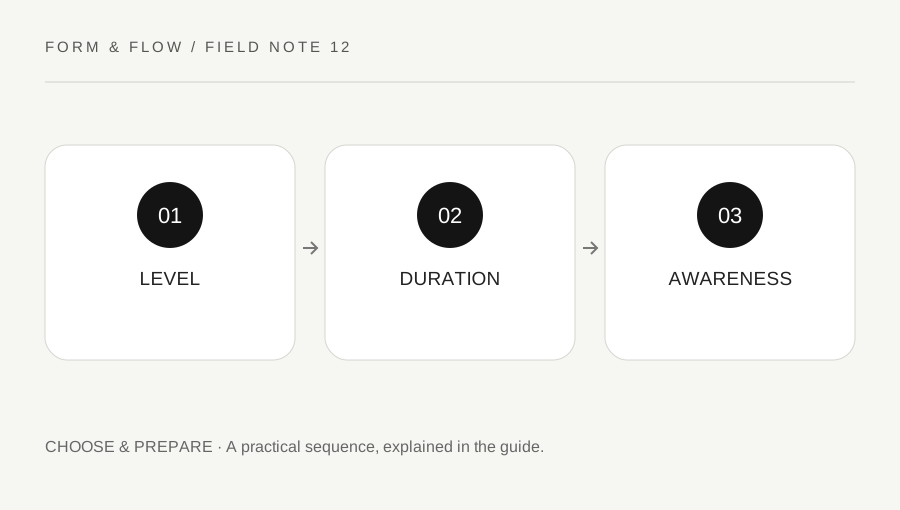
Original explanatory diagram. Examples illustrate a method or decision; they are not claims of personal testing.
Choose what the audio is for
Decide whether you need spoken instruction, background music or no audio. A technique video needs intelligible cues, while an ordinary familiar activity may not. Keep the purpose clear before increasing volume to compete with a noisy setting.
If you cannot hear necessary instructions comfortably, improve the source or environment where appropriate rather than turning the level up indefinitely. A device's percentage slider is not a universal sound-level measurement, because output and headphones differ.
Use safer listening habits
NIDCD recommends reducing excessive noise exposure, moving away from loud sources and using appropriate protection when needed. For personal audio, keep the level conservative and take account of duration. Do not use ringing or discomfort as a target or proof of a good session.
If hearing symptoms occur or persist, use appropriate professional advice. This article does not diagnose hearing changes or define a personal safe dose. Keep actual equipment and setting in mind rather than assuming one volume number suits every listener.
Preserve needed awareness
Outdoor routes, shared spaces and equipment settings can require attention to instructions, traffic or other people. Follow local and provider rules about headphones. Noise cancellation or both ears covered may be unsuitable in some contexts, so choose an appropriate arrangement rather than treating it as a universal preference.
Do not handle a phone during a movement that requires attention. Set up the source beforehand or pause safely. Keep cords and devices out of places where they can catch or interfere with equipment.
Work through a noisy-room example
Suppose spoken video cues are hard to hear over household noise. Instead of raising the output repeatedly, choose a quieter suitable time, use a clearer source or ask for an appropriate alternative instruction format. Check that the screen and audio setup still allow safe movement.
For a class, ask the provider about the sound level or available arrangements. Do not assume discomfort is unavoidable because other participants appear unconcerned. The practical goal is usable instruction without unnecessary exposure or lost awareness.
Review audio separately from workout success
After the session, note whether instructions were understandable and the listening arrangement was appropriate. Do not judge the activity by how loud the music was. A quieter session can still be organized and useful.
Keep any relevant hearing or accessibility needs with appropriate individual guidance. This guide supports a practical listening plan rather than promising that one headphone type or slider setting prevents every risk. Clear purpose, conservative level and suitable awareness are the decisions to make before pressing play.
Use a short audio note with purpose, source, listening arrangement and environmental awareness needs. Do not write a device slider percentage as though it were a measured sound exposure. If a class or room is too loud for comfortable instruction, ask about suitable arrangements before repeating it. For a home source, captions or a clearer demonstration may help where appropriate, but they do not make an unsuitable exercise suitable. Keep the audio decision separate from the movement decision. Both need to work in the actual setting, and neither should depend on ignoring discomfort or losing important awareness.
A practical checklist
Choices are saved in this browser. Reset them here or clear this site’s browser storage.
Questions that come up
Is fifty percent volume universally safe?
No universal slider percentage describes every device, headphone and exposure. Use appropriate listening guidance and a conservative setup.
Should I raise volume to cover a noisy room?
Improve the environment or source where practical instead of increasing output indefinitely. Consider an appropriate alternative instruction format.
Does this diagnose ringing after exercise?
No. Hearing symptoms need suitable professional advice, especially if they persist. Do not treat them as an expected goal of a session.
References & scope
Background references checked on 18 October 2026. Worked examples and diagrams are original teaching material.