Exercise Shorts: Check the Liner, Waistband and Movement Before a Session
Shorts that feel comfortable while standing can behave differently when you sit or move. Check the actual waistband, liner, seams and coverage you want using ordinary movements appropriate to you. This is a garment assessment rather than a body-size rule.
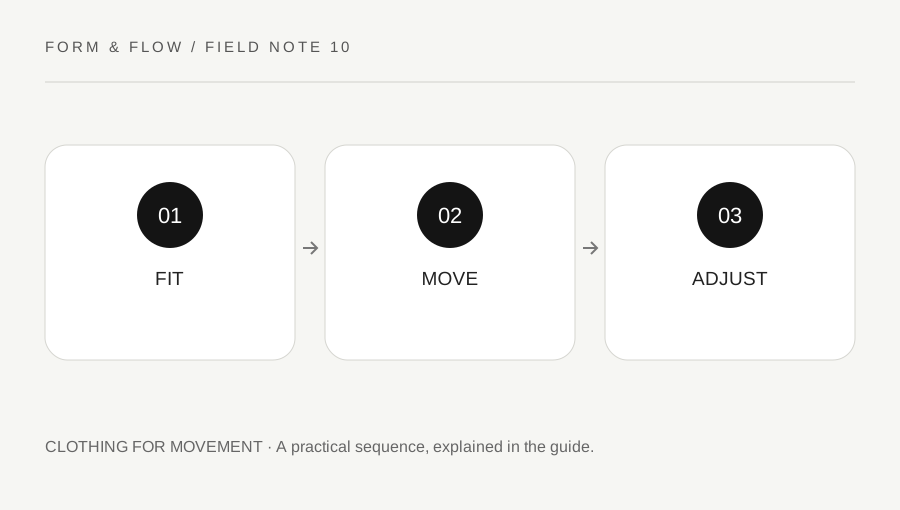
Original explanatory diagram. Examples illustrate a method or decision; they are not claims of personal testing.
Read the garment construction
Look at the waistband, drawcord, liner and seam positions. A lined short and an unlined short create different layering decisions. Choose suitable underlayers according to the garment and your preferences rather than assuming every product uses the same design.
Check the size information and actual fit without relying on a label alone. The waistband should feel secure and comfortable, not dependent on excessive tightening. If it causes pressure or the garment cannot accommodate ordinary movement, compare another fit rather than forcing it to work.
Use a modest movement check
Sit, walk and bend only within comfortable familiar movement. Check whether the liner or outer layer shifts in a way that bothers you. Assess the coverage you want in ordinary light, keeping privacy during any mirror or photograph comparison.
Do not use an unfamiliar strenuous exercise as a clothing test. The goal is noticing garment behavior, not proving flexibility or endurance. A short that repeatedly needs correction may be unsuitable for that activity even if it looked fine in a product picture.
Check pockets and carried items
Put only the items you realistically intend to carry into the pockets and move normally. A phone or keys can change how the waistband sits. Follow any activity or venue rules about loose objects and keep sharp or bulky items from interfering with movement.
If storage is awkward, use an appropriate separate arrangement rather than tightening the garment until it becomes uncomfortable. Clothing fit and item storage are related but different decisions. An empty-pocket fitting does not establish how the short behaves when loaded.
Compare a liner example
Imagine a pair whose outer layer is comfortable but the liner pulls during sitting. Loosening the waistband may not address the liner's fit. Compare the garment's size and construction or choose another suitable design instead of assuming every problem comes from the waist.
If rubbing or skin irritation occurs, stop using the uncomfortable arrangement and seek appropriate advice if symptoms persist. Do not apply a generic product or modification based solely on an outfit guide. This article does not diagnose skin problems.
Keep the activity context in the decision
A short can work for one activity and not another because movement, setting and pocket needs differ. Record the useful pairing without claiming one design is best for everyone. Follow any safety-specific clothing requirements for the actual activity.
The successful check leaves you with a comfortable garment that does not need constant adjustment during appropriate movement. It does not require a particular brand, body shape or coordinated set. Choose from suitable existing options first and use a precise explanation if another fit or construction is needed.
Make separate notes for waistband, liner, outer layer, seams and pockets. This prevents a general complaint that the shorts feel wrong from hiding the actual feature that needs comparison. Check the garment with any intended underlayer and realistic carried items, then remove unnecessary loads if they interfere. Keep the test modest and private. If you compare another size or construction, change one feature where practical and note other differences honestly. The goal is a suitable garment for the actual movement, not a judgment about a body or a demand that one label size fit identically across brands.
A practical checklist
Choices are saved in this browser. Reset them here or clear this site’s browser storage.
Questions that come up
Can tightening the waistband fix every issue?
No. Liner, seam and overall cut can create separate problems. Avoid uncomfortable pressure and compare a more suitable fit or construction.
Should I test with a hard workout?
No. A modest familiar movement check is enough to inspect basic garment behavior. Do not use unfamiliar strenuous movement as a fitting test.
Is one short suitable for every activity?
Not necessarily. Movement, storage and venue requirements differ. Keep the actual use context in the decision.
References & scope
Background references checked on 18 October 2026. Worked examples and diagrams are original teaching material.