Indoor Class Footwear: Check the Floor and Provider’s Requirement First
An indoor class can have specific footwear rules based on its floor, equipment and activity. Check those requirements before choosing shoes from appearance alone. This guide organizes the decision and does not prescribe footwear for an injury or individual medical need.
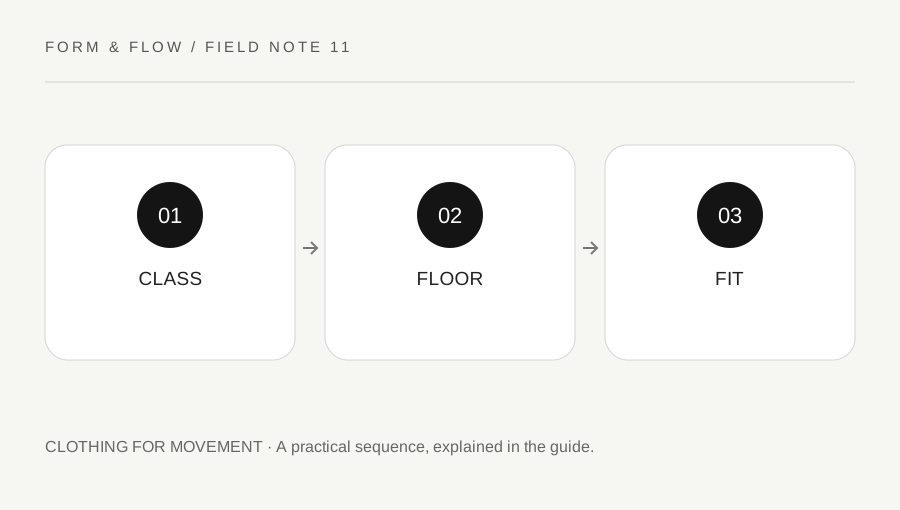
Original explanatory diagram. Examples illustrate a method or decision; they are not claims of personal testing.
Read the provider’s rule
Confirm whether the session requires shoes, a particular footwear type or another supported arrangement. A dance studio, equipment class and mat-based session can have different requirements. Do not infer the rule from a promotional image or what another participant wears.
Ask about clean indoor soles or other floor-protection requirements where relevant. Follow the provider's instructions and bring the actual footwear information to a qualified instructor if uncertain. A general style label such as trainer does not establish suitability for every activity.
Inspect the actual pair
Check the shoe's condition, fastening and intended use according to its maker. Look for loose parts, damage or a sole condition that needs assessment. Do not use an indoor class as a test of a questionable shoe.
Comfortable standing is only one part of fit. Use ordinary appropriate movement before the session and keep the shoe securely fastened. If pain or persistent discomfort occurs, seek suitable advice rather than assuming a different lacing trick will solve a medical or fit issue.
Keep floor interaction in context
The surface and activity influence the provider's requirements. A shoe that works on one floor may feel different on another. Do not attempt risky movements to test grip or turning. Ask the instructor about the supported arrangement instead.
Avoid borrowing a shoe category from another sport without checking. Appearance, colour and a clean upper do not establish technical suitability. If the footwear cannot meet the class requirement, choose an appropriate alternative arrangement with the provider rather than improvising during the session.
Plan the arrival transition
If you need to change footwear at the venue, allow time and use the designated area. Keep bags and removed shoes out of movement spaces. Check that necessary personal items remain accessible without leaving loose objects near equipment.
For a worked example, a venue may request a clean indoor pair. Prepare that pair in advance and confirm it also meets the activity requirement. Cleanliness alone does not make an unsuitable design appropriate, and technical appearance alone does not satisfy the venue's floor rule.
Review the session-specific choice
After an appropriate session, note whether the provider's instructions were clear and the footwear remained comfortable and secure. Keep relevant questions for the instructor or a suitable professional. Do not generalize one positive experience as proof that the pair suits every class.
Use style coordination only after function and requirements are settled. The useful outcome is a readable decision based on the actual session, floor, shoe and person. It does not require a brand recommendation or promise that one model prevents injury.
Before the first visit, write the provider's exact footwear request and any question about the floor or equipment. Confirm that your intended pair meets both the activity requirement and the venue's cleanliness rule. Keep a simple arrival plan if shoes must be changed, using the designated area and storing the removed pair out of walkways. After an appropriate session, note comfort and security without making an injury-prevention claim. If the pair did not work, describe the concrete issue to the instructor or suitable professional rather than purchasing another visually similar shoe without clarifying the requirement.
A practical checklist
Choices are saved in this browser. Reset them here or clear this site’s browser storage.
Questions that come up
Are all trainers interchangeable indoors?
No. The activity, floor and provider requirements differ. Check the actual session and product rather than the broad style name.
Can I test grip with a risky movement?
Do not improvise a risky test. Ask the instructor about the supported footwear and floor arrangement.
Does this recommend shoes for an injury?
No. Individual pain, injury or medical needs require appropriate professional advice.
References & scope
Background references checked on 18 October 2026. Worked examples and diagrams are original teaching material.