Plan a Workday Movement Break Around the Task, Not a Punishment Timer
A small break can be easier to use when it fits a natural pause and the available space. Choose appropriate familiar movement or a change of task within your circumstances. This guide organizes breaks and does not prescribe a medical exercise routine.
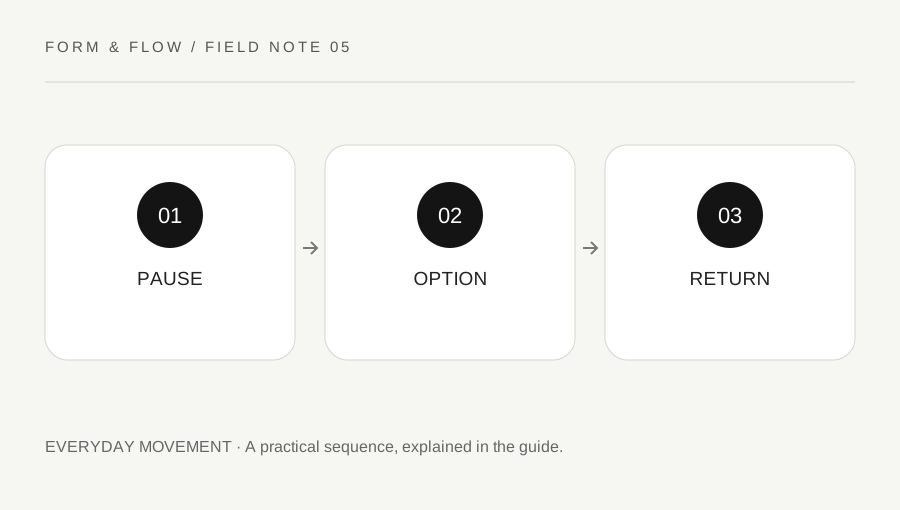
Original explanatory diagram. Examples illustrate a method or decision; they are not claims of personal testing.
Find a real task boundary
Look for a point when you can step away safely, such as finishing a call or completing a document section. Do not interrupt a safety-critical task because a timer rings. Workplace procedures and accessibility needs take priority over a generic break suggestion.
Choose one realistic opportunity rather than setting a dense schedule that you immediately ignore. A cue should invite a useful pause, not label you as failing. Keep the plan compatible with meetings, required duties and any individual health guidance.
Choose a familiar suitable option
The break might involve an ordinary short walk where appropriate, changing position or another familiar activity that suits you. Check the route and surrounding space. Do not turn an office aisle into an exercise area or use furniture as improvised equipment.
If standing or walking is not suitable, use an appropriate option within your abilities and any professional advice. A general website cannot choose adaptations for an individual condition. The key organizational idea is making the option available, not insisting that everyone perform the same movement.
Use reminders lightly
A calendar note or timer can help you notice the chosen task boundary. Keep its sound and frequency considerate of other people. If the reminder repeatedly arrives at an unusable moment, change the cue instead of adding more alarms.
Do not assume one break interval is universally correct. The job, environment and person differ. Follow relevant workplace guidance and individual advice. A reminder can support a plan but cannot determine what activity is appropriate or replace an accessible working arrangement.
Work through a simple example
Suppose a long writing task has a natural pause after a draft section. You plan a brief suitable change of activity, check that the route is clear and return to the next section. The break is attached to a real workflow rather than an arbitrary demand to perform a set of repetitions.
Afterward, note whether it was practical. If not, identify the barrier: timing, space, uncertainty or an unsuitable option. Adjust that one barrier. Do not compensate for a missed break by forcing a harder activity that was never part of an appropriate plan.
Review the arrangement with context
A useful review asks whether the cue was noticeable, the option accessible and the return to work manageable. It does not claim that one break cured discomfort or replaced a broader activity plan. Persistent symptoms or questions about safe movement need appropriate professional advice.
Keep the plan simple enough to repeat and adapt it when duties change. CDC's public activity guidance can provide broad context, while workplace and individual needs govern the actual arrangement. The useful outcome is a realistic opportunity for suitable movement, not a score based on how many alarms you obeyed.
Create one line describing the cue, one describing the suitable option and one describing the return task. For example, after finishing a draft section, use an appropriate brief change of activity, then begin the next review pass. The example describes a workflow rather than prescribing movement to every reader. If the cue fails, note whether it was unnoticeable, unsafe to use at that moment or incompatible with duties. Revise that practical feature instead of adding guilt or repeated alarms. Keep relevant workplace arrangements and accessibility needs in the plan, since a generic timer cannot resolve them.
A practical checklist
Choices are saved in this browser. Reset them here or clear this site’s browser storage.
Questions that come up
Must everyone stand or walk for the break?
No. Choose an appropriate option for the person and setting, with individual guidance where needed. Accessibility is part of the plan.
Is one timer interval right for everyone?
No. Duties, environment and individual needs differ. Use relevant guidance and a realistic cue.
Can breaks replace all other activity?
This guide does not make that claim. Use appropriate public recommendations and individual advice for broader activity planning.
References & scope
Background references checked on 18 October 2026. Worked examples and diagrams are original teaching material.