Preview an Exercise Video Before Following Its First Cue
A video can be convenient while still needing a suitability check. Preview the complete session, instruction style, equipment and options before starting. A title, thumbnail or high view count cannot establish that the session is appropriate for every viewer.
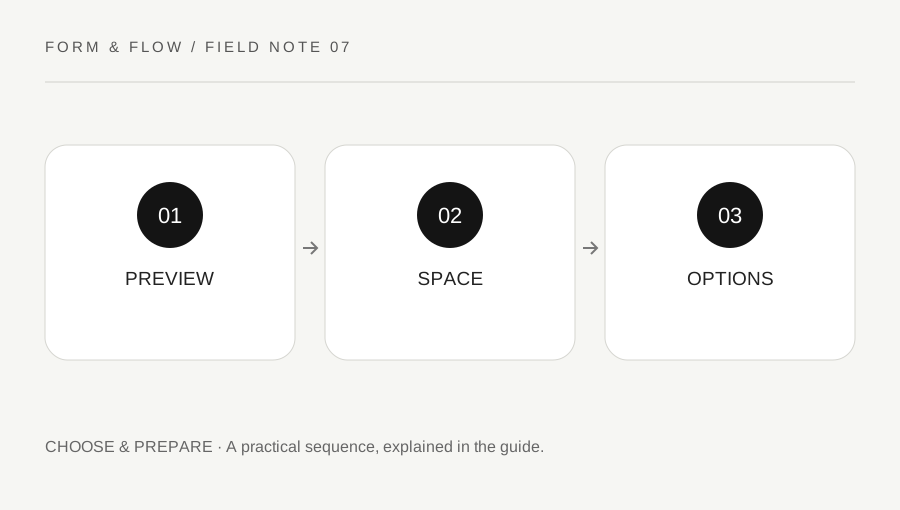
Original explanatory diagram. Examples illustrate a method or decision; they are not claims of personal testing.
Read the source and scope
Look for the instructor's relevant qualifications, the intended audience and a clear session description. Check whether the video is a complete class or only a short demonstration. A clip can omit preparation and finishing stages that belong to the original method.
Avoid using popularity as a substitute for suitable instruction. A general video cannot assess an individual injury, condition or adaptation need. Use appropriate professional advice where relevant, and do not assume a beginner label supplies personal clearance.
Watch the movement demands
Preview whether the session uses floor transitions, balance tasks, fast direction changes or unfamiliar equipment. Check that demonstrations are visible and spoken cues are understandable. Note whether the instructor provides appropriate simpler options and permission to pause.
If you cannot see or understand a movement safely, do not guess while trying to keep pace. Seek suitable instruction or choose another source. The aim is not to prove you can follow any screen cue; it is to choose a clear method that fits your circumstances.
Prepare the actual environment
Clear a suitable area and follow equipment instructions. Keep pets, children and unrelated objects out of the immediate movement space. Do not use unstable furniture or improvised equipment to imitate a setup shown in a video.
Position the screen so you can consult it without forcing awkward repeated turns during movement. Use an appropriate listening level and avoid a setup that blocks needed environmental awareness. Check the whole plan, including warm-up, cool-down and safe equipment reset, before pressing play.
Use pause as part of learning
A prerecorded session does not require you to match every repetition or transition. Pause to review instructions when appropriate, or choose a clearer simpler session. Stop if pain, unusual symptoms or feeling unwell occurs; the video's timeline is not a reason to continue.
For a first comparison, preview two sources and choose the one whose demands, options and instructions are clearest. Keep the choice based on suitability rather than promises of rapid transformation, calorie totals or the most dramatic thumbnail.
Review what the video actually provided
After an appropriate actual session, note whether the description matched the experience and whether the instructions were usable. Record any question for a qualified instructor rather than inventing a modification from a freeze-frame.
Do not describe a video as universally safe because one household member completed it. The useful review is specific to the source and your circumstances. A clear preview habit can improve selection and preparation while leaving individualized exercise advice to qualified people who can assess the relevant needs.
Use a preview checklist with complete duration, source qualifications, intended level, equipment, transitions and available options. Mark anything you could not understand before attempting the session. If the video is edited into a short clip, find the complete supported source rather than assuming the missing parts are optional. Keep your viewing position and audio arrangement practical for the room. A successful preview can end with choosing another source; it does not require following the first video you opened. This is a selection skill, separate from the actual exercise technique and any individual adaptation guidance.
A practical checklist
Choices are saved in this browser. Reset them here or clear this site’s browser storage.
Questions that come up
Does a high view count prove suitability?
No. Popularity does not assess your circumstances or establish instruction quality. Review the source, demands and options.
Must I keep up with every repetition?
No. A recorded timeline is not an individual prescription. Use appropriate guidance and pause or stop when needed.
Can I invent a modification from the screen?
Do not guess at unfamiliar technique or individual adaptations. Seek suitable instruction or choose a source with clear appropriate options.
References & scope
Background references checked on 18 October 2026. Worked examples and diagrams are original teaching material.