Read a Fitness Class Description Before Booking the Session
A class title can sound welcoming while leaving important details unclear. Check its level, movement demands, equipment and available adaptations before booking. A beginner label is useful context, not a guarantee that one class suits every person.
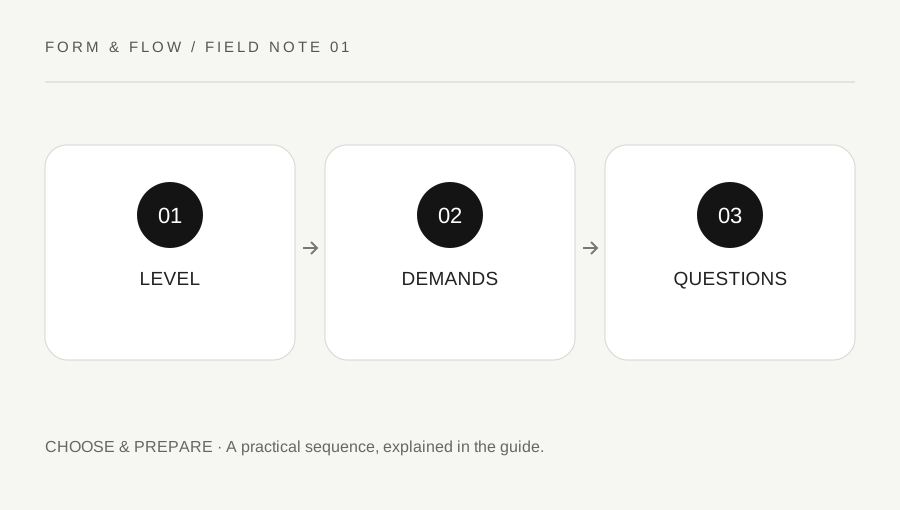
Original explanatory diagram. Examples illustrate a method or decision; they are not claims of personal testing.
Look beyond the name
Read the full description for duration, expected experience, pace and movement types. Low impact describes one aspect of a session and does not automatically mean low effort. A short class can still be demanding. Avoid choosing solely because a title sounds gentle or energetic.
Check whether the session includes floor work, rapid changes of position, balance demands or equipment you have not used. These details help you ask specific questions. You do not need to diagnose your own ability from a marketing paragraph; an instructor should be able to explain the actual format.
Ask about instruction and options
Find out how the instructor introduces movements and offers alternatives. Ask whether a first-time participant can pause, watch a demonstration or choose a simpler supported option. A class that requires prior technique may not be the right first session even if its advertised duration is convenient.
If you have an injury, condition, pregnancy-related need or uncertainty about appropriate activity, use qualified clinical guidance and tell the instructor about relevant restrictions privately. A general website cannot assess those needs. Do not treat an available modification as automatic medical clearance.
Check practical access
Confirm the location, arrival process, changing arrangements and required items. Ask about accessible entrances or seating if relevant. Knowing the practical setup reduces last-minute rushing and makes it easier to focus on the instructions.
Read footwear and clothing requirements. A studio class, pool session and equipment-based workout can have different rules. Do not assume the outfit from a promotional image is the complete preparation list. Bring only what the provider actually requests and any personal essentials appropriate to your needs.
Work through a comparison
Imagine two sessions at the same convenient time. One clearly explains its beginner instruction, equipment and pause options; the other lists advanced movement sequences with little explanation. The useful comparison is the actual demands and support, not which title sounds more fashionable.
Contact the provider with one or two concrete questions before booking. Keep the answer with the class details. If the response remains unclear, choose a better-explained option or seek appropriate individual guidance rather than feeling obliged to attempt an unsuitable session.
Review the first session honestly
After attending, note whether the description matched the experience, whether instructions were understandable and whether you could use the offered options. Keep comfort and learning separate from a pressure to keep up with everyone else.
Do not rate success only by sweat, exhaustion or a device calorie estimate. A first visit can be useful because it clarifies the format and your questions. Choose a repeat only when the session and available guidance suit your circumstances. This guide is about reading and preparation, not a personalized exercise prescription.
Use a comparison note with five headings: intended experience, movement demands, equipment, available options and practical access. Copy the provider's answer accurately and mark unanswered items as questions. If a class includes floor work, ask how that is introduced rather than assuming the word beginner removes the transition demand. Keep relevant personal restrictions out of public comments and use the provider's private process. After attending an appropriate session, update the note with actual observations, clearly separated from the original description. This gives you a useful source-specific record without claiming that one class format is suitable for everyone.
A practical checklist
Choices are saved in this browser. Reset them here or clear this site’s browser storage.
Questions that come up
Does low impact mean easy?
Not necessarily. Impact and effort are different features. Ask about the actual movements, pace and experience expected.
Should I copy everyone else’s option?
Choose an appropriate option with the instructor’s guidance. Other participants’ experience and circumstances can differ.
What if the description is vague?
Ask specific questions before booking. An unclear title is not enough information to establish suitability.
References & scope
Background references checked on 18 October 2026. Worked examples and diagrams are original teaching material.