After a Disrupted Week: Review the Plan Before Trying to Catch Up
A missed session can reveal a practical barrier rather than a need for punishment. Review the actual interruption and choose an appropriate next opportunity. This guide addresses organization, not recovery from illness, injury or a personalized exercise progression.
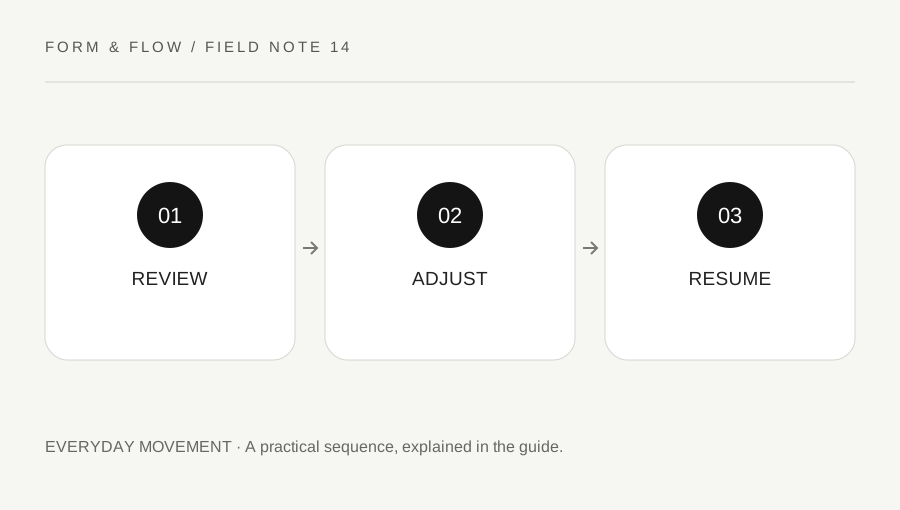
Original explanatory diagram. Examples illustrate a method or decision; they are not claims of personal testing.
Describe what interrupted the plan
Write the actual reason in plain language: a meeting moved, the venue closed, equipment was unavailable or the chosen time was unrealistic. Keep illness, injury and health-related concerns separate because they can require appropriate professional advice before resuming.
Avoid turning one missed entry into a judgment about character. A plan is information about intended activity, not a contract to perform unsuitable exercise later. The useful question is which practical condition changed and whether the original arrangement still makes sense.
Choose one barrier to address
If timing failed, choose a more realistic opportunity. If the source instructions were unclear, find suitable guidance. If equipment was missing, use an appropriate supported alternative only when the method allows it. Do not improvise a new programme merely to preserve the appearance of the old schedule.
CDC encourages activity choices that match abilities and are enjoyable. Apply that broad principle within your circumstances and any individual guidance. A general article cannot determine an appropriate return after a long break or a medical event.
Avoid compensation arithmetic
Two missed calendar entries do not automatically mean the next session should be twice as long or intense. Activity planning is not a debt ledger. Use an appropriate plan and qualified advice where needed rather than multiplying effort to make a weekly total look tidy.
Keep the next opportunity realistic and complete, including necessary preparation and finishing stages. A shorter appropriate session can be more manageable than squeezing a longer plan into inadequate time. The point is to resume a suitable process, not erase the record of a changed week.
Work through a practical example
Suppose an evening class repeatedly conflicts with a work meeting. Review another suitable time or a clearly instructed option that fits the actual schedule. Confirm its demands and access rather than choosing solely because it fills the empty calendar slot.
Record the change and what you expect it to solve. After an actual attempt, note whether the barrier was reduced. If not, revise that assumption. This is an organizational experiment, not a guarantee that motivation alone can overcome every work, access or health constraint.
Keep the record honest and flexible
Leave missed sessions marked as planned but not completed, with a brief reason if useful. Add the next actual activity separately. Do not rewrite the week to look uninterrupted or compare it with another person's circumstances.
Use appropriate individual advice for health questions and stop if pain or feeling unwell occurs during activity. The useful outcome is a more workable plan with clear limits. It does not require a streak, a calorie target or a promise that every interruption can be solved by greater discipline.
Keep a small before-and-after plan: original opportunity, actual barrier, proposed change and one review question. For a moved meeting, the review question might be whether the new suitable time remained available. For unclear instruction, it might be whether the replacement source explained the demands and options. Do not use the note to assign a penalty or an obligation to recover lost minutes. Preserve any health-related return advice separately and follow it. The practical record is complete when it identifies what changed and whether that change made an appropriate activity opportunity more workable in the actual week.
A practical checklist
Choices are saved in this browser. Reset them here or clear this site’s browser storage.
Questions that come up
Should I double the next session to catch up?
Do not assume that is appropriate. Use a suitable plan and individual guidance where needed. A missed calendar entry is not an exercise debt.
Is this advice for returning after injury?
No. Injury, illness or relevant medical events need appropriate individualized guidance. This article concerns ordinary scheduling review.
Should I erase missed sessions from the log?
Keep planned and completed activity distinct. An honest record helps identify barriers and avoids inventing an uninterrupted pattern.
References & scope
Background references checked on 18 October 2026. Worked examples and diagrams are original teaching material.