The Talk Test: Understand Relative Effort Without Turning It into a Diagnosis
The talk test is a practical rule of thumb for aerobic effort, not a medical assessment. CDC describes moderate effort as allowing conversation but not singing, and vigorous effort as allowing only a few words before a breath. Use the idea within appropriate activity guidance.
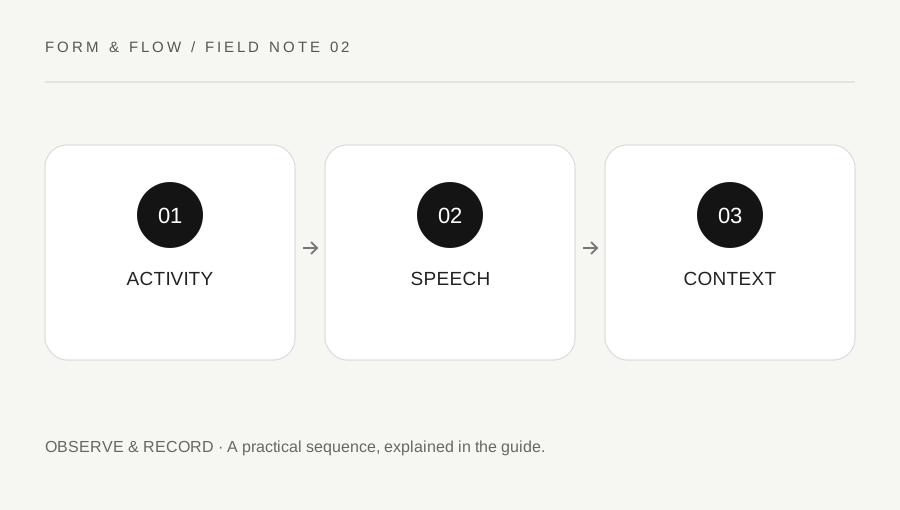
Original explanatory diagram. Examples illustrate a method or decision; they are not claims of personal testing.
Distinguish effort from a fixed activity label
The same activity can feel different to different people. Pace, terrain, experience and individual circumstances affect relative effort. Do not assume a particular walking speed or class title creates the same intensity for every participant.
CDC describes relative intensity as how hard the person is working, while absolute intensity uses another reference system. The talk test belongs to that practical effort discussion. It is not a way to diagnose a condition or decide whether symptoms are safe to ignore.
Use ordinary speech as a rough observation
During an appropriate familiar aerobic activity, notice whether normal conversation remains comfortable. Do not force a speech test during an unsafe task or intentionally push to breathlessness to prove a category. Follow any individual exercise guidance you have been given.
The test is a rule of thumb, not an exact instrument. Environmental noise, speaking style and the activity itself can affect how you use it. Keep the observation descriptive and avoid claiming a precise heart-rate zone from the ability to say a sentence.
Record context alongside the observation
If you keep an activity note, include the activity, approximate duration and conditions, plus a plain description of effort. A familiar route on level ground and the same route with hills are different contexts. Do not compare them as if only motivation changed.
If activity causes pain, unusual symptoms or feeling unwell, stop and use appropriate health guidance rather than treating the talk test as permission to continue. People with medical conditions or uncertainty about activity suitability need individual advice. A website rule of thumb cannot provide clearance.
Work through a practical interpretation
Imagine a familiar walk where you can chat comfortably at one pace but can manage only brief phrases after increasing effort. That observation may help describe the change in relative effort. It does not establish the right target for you or prove a measured training benefit.
Use an appropriate plan and adjust within its guidance rather than chasing a more intense label. A session need not become harder every time to be worthwhile. The useful result is awareness of what you actually experienced and clearer communication with a qualified instructor or clinician where needed.
Keep measurement claims modest
A watch, a talk-test note and a class category are different kinds of information. They can be discussed together without pretending they are interchangeable. Device estimates have their own limits, and a general category does not describe every moment of a session.
When sharing an activity record, state the observation and context rather than publishing a personalized recommendation for someone else. CDC's public guidance can explain the broad framework. Your circumstances and any relevant professional advice determine how that framework should be applied.
A small descriptive record can say familiar level route, ordinary conversation possible, rather than assigning an exact physiological score. On another day, note a changed surface or weather context before comparing effort. If an instructor uses an effort scale, ask how that framework applies to the session rather than treating several different systems as identical. Do not deliberately repeat an uncomfortable effort just to obtain a cleaner record. The value of the note is clearer communication about an actual experience, with appropriate professional interpretation where needed. It should not become a challenge to prove a harder intensity category.
A practical checklist
Choices are saved in this browser. Reset them here or clear this site’s browser storage.
Questions that come up
Can the talk test diagnose fitness or illness?
No. It is a practical effort rule of thumb. It does not diagnose conditions or establish that symptoms are safe.
Does the same pace mean the same effort for everyone?
No. Relative effort depends on the person and context. Avoid assigning one universal experience to an activity label.
Should every session be vigorous?
This article does not prescribe a personal intensity target. Use appropriate public guidance and individual advice for your circumstances.
References & scope
Background references checked on 18 October 2026. Worked examples and diagrams are original teaching material.