Leave Room for a Warm-Up and Cool-Down in the Session Plan
A session plan should account for getting started and finishing gradually, not only its busiest middle. Follow an appropriate activity method and any individual guidance. This article helps organize the sequence rather than supplying a personalized warm-up routine.
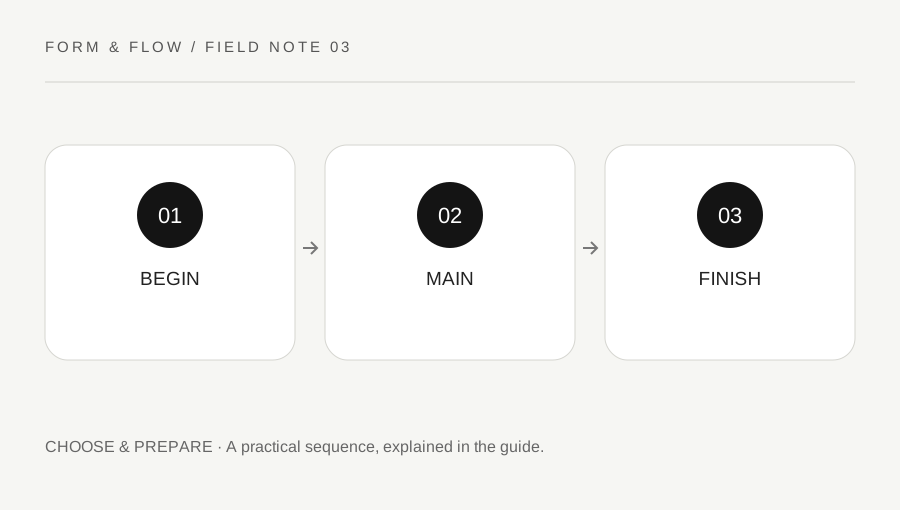
Original explanatory diagram. Examples illustrate a method or decision; they are not claims of personal testing.
Read the whole session before starting
Check whether the class, video or verified plan includes a warm-up and cool-down. A clip showing only the main sequence may not be a complete session. Preview the instructions and equipment needs before you begin so the opening minutes are not spent searching for a missing item.
The American Heart Association explains warm-up and cool-down as gradual transitions around activity. Use the guidance appropriate to your activity and circumstances. Do not assume one stretch or a rushed march in place supplies every preparation need for every sport.
Make the opening activity-specific
Follow the chosen plan's gradual introduction and instruction. A walking session and a technique-based equipment class can need different preparation. If you are learning a movement, instruction and an appropriate simpler version can matter as much as a timer.
Avoid treating discomfort as evidence that the warm-up is working. Do not force a range of motion or increase effort to keep pace with a video. Stop if pain or feeling unwell occurs, and obtain suitable guidance for relevant health concerns. This general planning guide cannot assess an injury or prescribe rehabilitation.
Allow a deliberate finish
Keep enough time to follow the plan's gradual finish instead of stopping abruptly because the calendar slot has ended. If a class finishes with instructions, listen before packing equipment. A cool-down is not a promise that soreness or every possible problem will be prevented.
Follow any stretching guidance from a suitable qualified source or instructor rather than inventing aggressive positions after exercise. The aim here is to preserve the complete supported sequence, not to add a complicated extra routine or compare how far people can stretch.
Use a schedule example
Suppose you have a short available time slot and a video whose main sequence fills it entirely. Preview the complete session and choose a shorter appropriate option if that is needed to retain its opening and closing stages. Do not remove those stages automatically to fit the headline duration.
Write the whole sequence in your note: preparation, guided opening, main activity, guided finish and equipment reset. This makes the real time requirement visible. The result may be a simpler session that fits your day without rushing, rather than a longer one squeezed into an unsuitable window.
Review what interrupted the sequence
After a real session, note whether missing equipment, unclear instructions or timing caused you to skip a stage. Address that practical barrier before increasing the plan. A prepared space and a suitable complete source can be more helpful than adding another exercise.
Keep individual restrictions and professional advice attached to the plan where relevant. Do not generalize your routine as suitable for everyone. A useful session record explains the source and sequence, with actual observations kept separate from promises about performance or recovery.
Check the source's stated duration against the complete available time, including safe setup and reset. A headline main-set duration may not include the whole sequence. Write the opening and finish as named stages in the plan so they are not silently removed when the day becomes busy. If an interruption occurs, return using appropriate guidance rather than resuming at an unfamiliar fast cue. Keep the source link or class details with the note. This simple scheduling check preserves the method's structure without inventing a universal minute count or claiming that one transition routine meets every person's needs.
A practical checklist
Choices are saved in this browser. Reset them here or clear this site’s browser storage.
Questions that come up
Can I skip the beginning to fit a long video?
Choose an appropriate complete shorter session instead of assuming the opening is unnecessary. Follow the source and any individual guidance.
Does cooling down guarantee no soreness?
No. Avoid guarantees. Use appropriate guidance and do not treat a cool-down as a cure for symptoms or injury.
Is one warm-up right for every activity?
No. The activity, technique and individual needs matter. This guide organizes a plan rather than prescribing one universal routine.
References & scope
Background references checked on 18 October 2026. Worked examples and diagrams are original teaching material.